Showing posts with label Art. Show all posts

Thursday, 18 May 2017

Samuel Palmer and Chagall

Samuel Palmer “Cornfield in the Mondenschein” Credit
Marc Chagall, Marie au Village
Credit

You would have understood each other well
And proved to us how periods of art
Are less important than the personal
Worlds that each painter makes from mind and heart.
The first stanza introduces the personal ideas of the speaker about the similarities between these two artists. The persona addresses the two painters, Samuel Palmer and Chagall, and considers an imaginary situation: what kind of relationship would they have had if they had met? She believes that they would have been good friends, in spite of the fact that they lived in different centuries (Palmer in the 19th Century, Chagall in the 20th.) and thus painted in different styles. They would have got on well because both seem to share common views. This would prove that the personal worlds artists create are more important than the way in which their works reflect the context of production. By using the words "mind" and "heart", the persona is highlighting the importance of combining imagination and thoughts with feelings in artistic creations.

Friday, 12 May 2017

Chinese Art


You said you did not care for Chinese art
Because you could not tell what dynasty
   A scroll or bowl came from. (...)
The speaker is reporting the words of the addressee, who apparently doesn’t appreciate Chinese Art. The reason why  the addressee doesn’t like Chinese art is related  to the fact that he cannot identify the period in which each work of art was produced as all artists seem to use the same traditional style. The persona uses  internal rhyme (scroll and bowl) to stress the fact that the addressee considers all Chinese productions are similar.

                         (...)  ´There is no heart’
You said, ‘Where time’s avoided consciously.’
The persona uses direct speech to introduce the voice of the addressee. In his view,

Thursday, 4 May 2017

Visit to an Artist

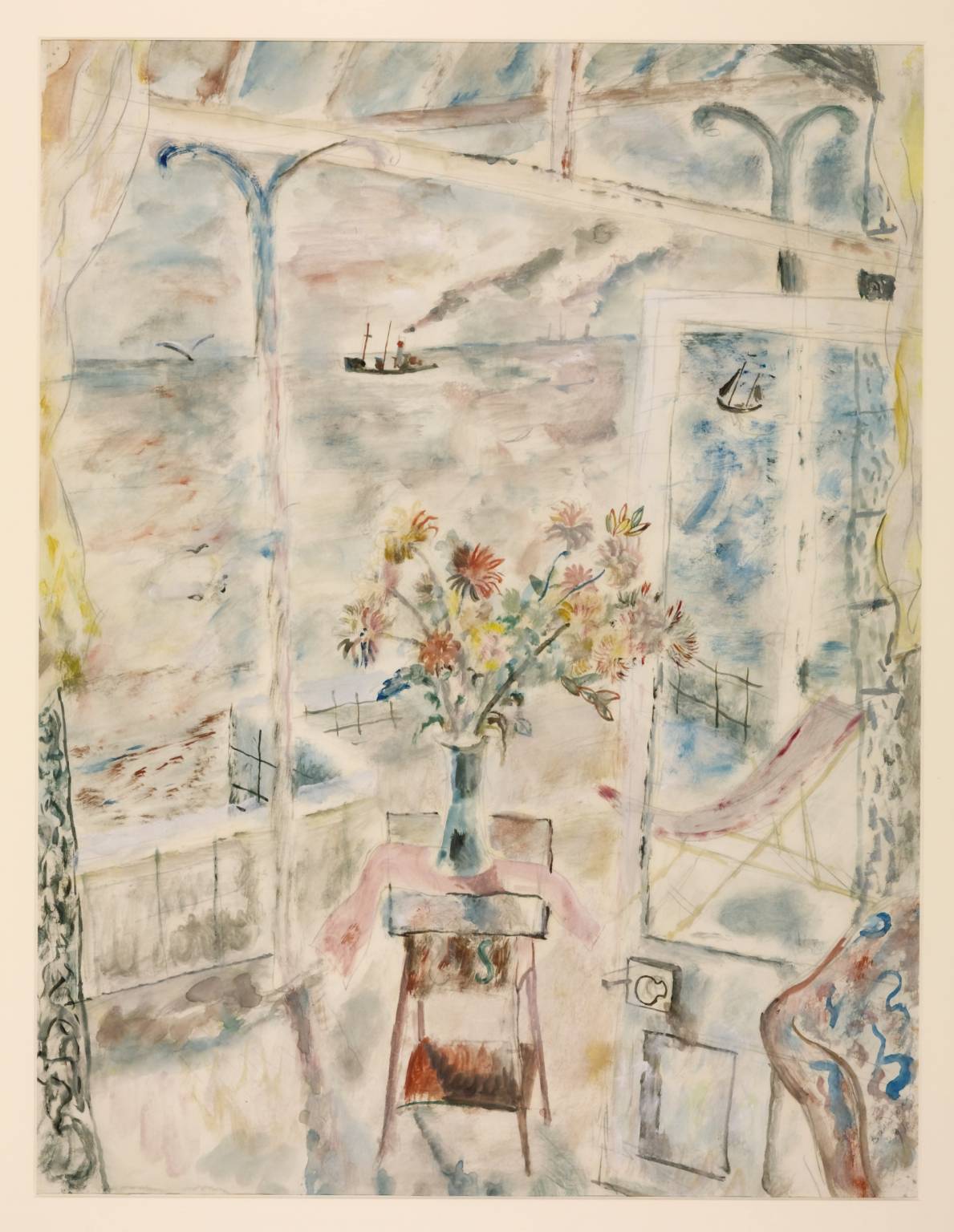
This poem may be describing the speaker's actual visit to the artist´s house or it may be depicting a close observation of the artist´s pictures, and therefore a metaphorical visit to him through his paintings. In fact, the first stanza, may be read as the description of a real room or as the description of the picture “The Terrace” by David Jones, the artist to whom the poem is dedicated:

Theterrace.jpg

“The Terrace” by David Jones


Stanza 1
Window upon the wall, a balcony
With a light chair, the air and water so
Mingled you could not say which was the sun
And which the adamant yet tranquil spray.


The first phrase of the poem (“Window upon the wall”) can be read at three different levels. First, it may be describing the real window in the artist´s house if we consider the poem is retelling an actual visit. Secondly, it may be a reference to the window that appears in the picture “The Terrace”, if we think that the speaker is metaphorically visiting the artist through an  examination of his pictures,  or, thirdly,  it can also be a metaphor for the painting (“The Terrace”) on the wall. This last reading implies that, in the speaker´s view, the work of art is a window that enables to see a different point of view and opens to a new world: that of  the artist’s  perspective. In contrast, the word “wall” reminds us of the limits of the persona´s own views.  Besides, in the first line,  the word “balcony” also conveys the idea of openness. A balcony connects inner and outer spaces , and at a metaphorical level, it suggests the communion between the inner world of the speaker and the one created by the artist.